Security Cheque Dishonour Attracts Liability Under Section 138 NI Act: Himachal Pradesh HC
 Copy Link
 Share
Share Save
Save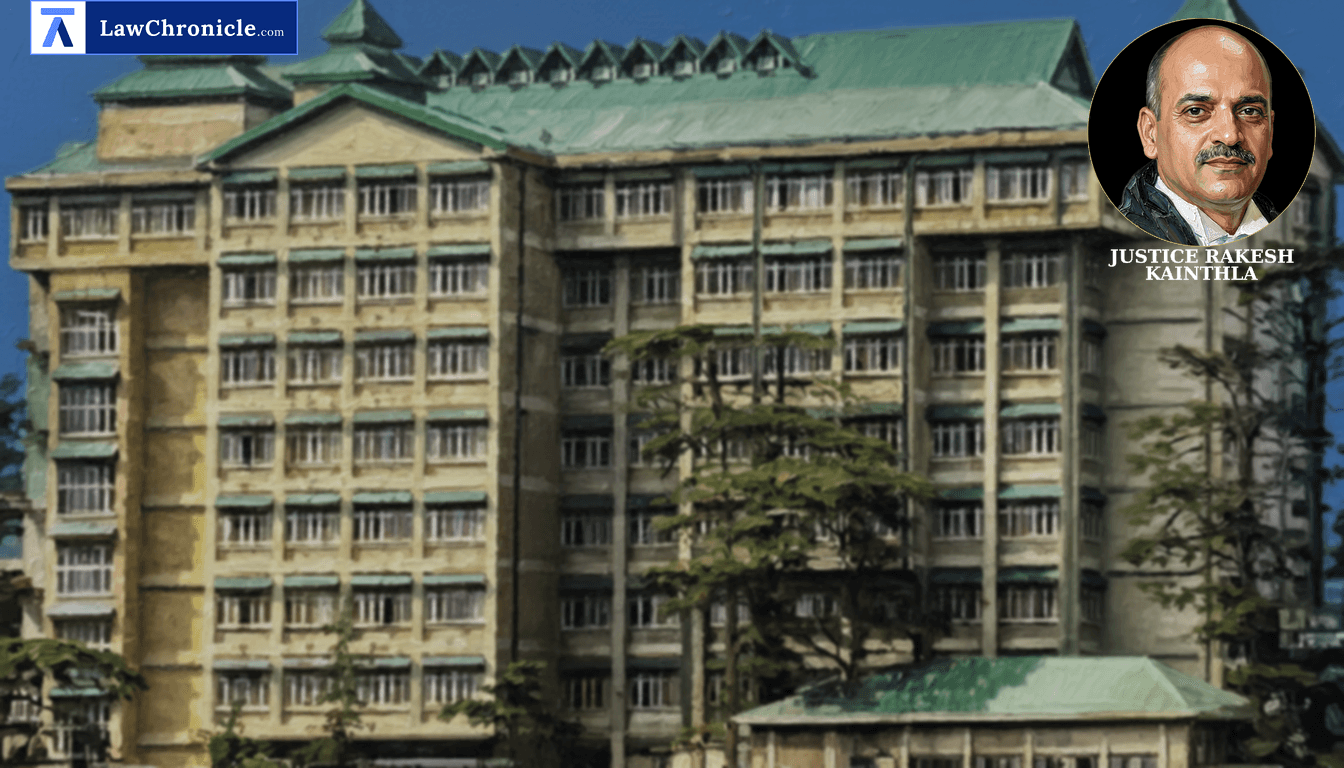
In a decisive reinforcement of the reverse onus principle, the Himachal Pradesh High Court has ruled that a signed blank cheque issued as security is not a worthless piece of paper and squarely attracts criminal liability upon dishonour. The Court overturned an acquittal, establishing that once a signature is admitted, the statutory presumption of a legally enforceable debt remains unshaken unless the drawer provides cogent evidence to the contrary.
A Single Judge bench of Justice Rakesh Kainthla heard an appeal directed against the judgment of the Judicial Magistrate First Class, Solan. The primary issue was whether the trial court was justified in acquitting an accused on the grounds that the complainant failed to produce business records, despite the accused admitting to the issuance of the cheque and receiving the material in question.
Key Takeaways
Security Cheque Validity
Dishonour of a cheque issued as security attracts the provisions of Section 138 of the Negotiable Instruments Act, 1881 if a debt exists on the date of presentation.
Reverse Onus Principle
Once the signature and issuance are admitted, the burden shifts entirely to the accused to rebut the presumption of liability through preponderance of probability.
Evidentiary Standards
Complainants in cheque dishonour cases are not required to prove a debt with the same rigour as a civil suit, provided the statutory presumptions are triggered.
Trial Procedure
Successor Magistrates can rely on evidence recorded by their predecessors if the case was tried as a summons case rather than a summary trial.
Magistrate’s Reliance on Predecessor's Evidence Upheld
The appellant contended that the successor Magistrate erred by relying on evidence recorded by his predecessor. However, the High Court, referring to Food Inspector, Cir. V.M.C.H. v. Y. Babji, Tripti Vyas v. State of Rajasthan, and Manoj Kumar Agrawal v. State of U.P., noted that since the evidence was recorded in full and a notice of accusation was put to the accused, it was treated as a summons case. Therefore, the restriction under Section 326(3) of the Code of Criminal Procedure, 1973 did not apply.
Presumption Under Sections 118 and 139 NI Act
The Court observed that the accused admitted to the signatures on the cheque and the receipt of notice. Relying on APS Forex Services (P) Ltd. v. Shakti International Fashion Linkers and Sanjabij Tari v. Kishore S. Borcar ( "2025 SCC OnLine SC 2069": 2025 CaseBase(SC) 746), the bench noted that the law reinforces the reliability of cheques in commercial transactions.
The Court, in its reasoning, observed: "The Court has to start with the presumption that the cheque was issued in discharge of the liability for consideration, and the burden is upon the accused to rebut this presumption... The Trial Court and the High Court proceeded as if the appellant were to prove a debt before a civil court; the plaintiff is required to prove his claim on the basis of evidence to be laid in support of his claim for the recovery of the amount due. Dishonour of a cheque carries a statutory presumption of consideration."
Effect of 'Stop Payment' Instructions
Regarding the accused's claim that he had instructed the bank to stop payment, the Court cited Laxmi Dyechem v. State of Gujarat ( "(2012) 13 SCC 375": 2012 CaseBase(SC) 816) to clarify that even a 'stop payment' instruction attracts Section 138 if there are insufficient funds or if the accused fails to prove the absence of a debt. The Court has the following directions:
"In view of the above, the present appeal is allowed and the judgment passed by the learned trial Court, acquitting the accused, is set aside and the accused is convicted for the commission of an offence punishable under Section 138 of N I Act. Let the accused be produced on 23.09.2026 for hearing him on the quantum of sentence."
Ratio
A signed blank cheque or a cheque issued as security, when voluntarily handed over to a payee, triggers the statutory presumptions under Sections 118 and 139 of the Negotiable Instruments Act. The drawer remains liable for its dishonour unless they adduce cogent evidence to prove that the cheque was not issued in discharge of a legally enforceable debt or liability. The complainant is not required to prove the debt as in a civil court once the execution of the instrument is admitted.
Background
The complainant, a manufacturer of HDPE pipes, alleged that the accused purchased material on credit and issued a cheque for ₹14,79,374/-, which was dishonoured due to 'insufficient funds'. The trial court had acquitted the accused, reasoning that the complainant failed to produce sale records and that the accused acted merely as an agent. The High Court, however, found that the accused's reply to the legal notice admitted the receipt of material worth over ₹23 lakhs, which was not rebutted by any proof of payment. Distinguishing the trial court's view, the High Court applied precedents like Sanjay Kumar v. State of Bihar ( "2026 SCC OnLine SC 1373": 2026 CaseBase(SC) 681) and Rohitbhai Jivanlal Patel v. State of Gujarat ( "(2019) 18 SCC 106": 2019 CaseBase(SC) 3177) regarding the scope of interference in acquittals, ultimately finding the trial court's judgment unsustainable.
Case Details:
Case No.: Cr. Appeal No. 28 of 2014
Neutral Citation: 2026:HHC:37770
Case Title: M/s Himalayan Plastics Ltd. Versus Anoop Kumar
Appearances:
For the Petitioner(s): Mr O.C. Sharma, Advocate.
For the Respondent(s): Mr Mukul Sood, Advocate.
Source: 2026 CaseBase(HP) 7988
 Breaking News