Debt Recovery Pressure Without Proximate Cause Not Abetment to Suicide: Gujarat HC
 Copy Link
 Share
Share Save
Save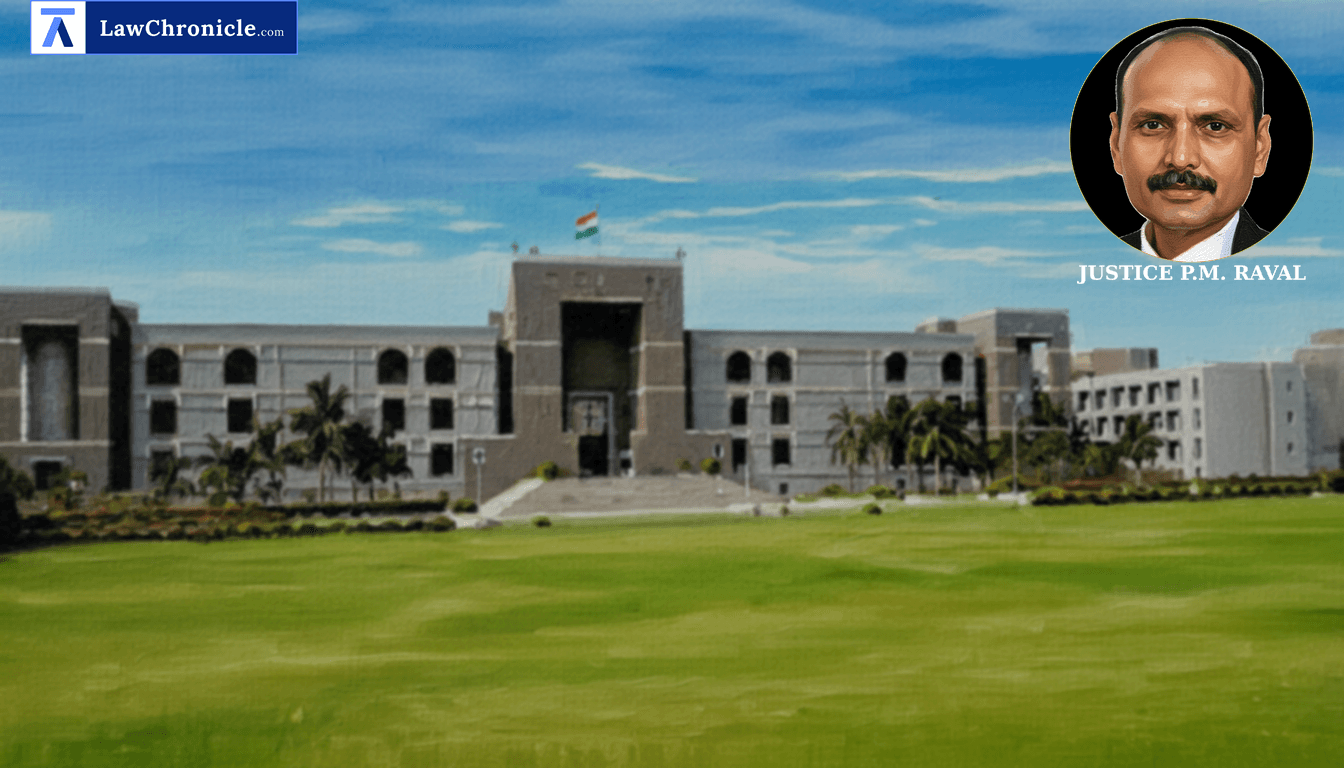
The Gujarat High Court has quashed criminal proceedings against a man accused of abetting a suicide, ruling that the mere exertion of pressure for debt recovery without a proximate prior act cannot be construed as a positive instigation to end one's life. This decision underscores that the criminal machinery cannot be weaponized into an engine of harassment where the essential statutory ingredients of a crime, particularly the requisite mens rea for abetment, are demonstrably absent.
Justice P. M. Raval, presiding over the matter, adjudicated the application filed under Section 482 of the Criminal Procedure Code, 1973. The Court examined the legality of an FIR charging the applicant with offences under Section 306 and Section 114 of the Indian Penal Code, 1860, alongside various provisions of the Gujarat Money Lenders Act, 2011, following the suicide of a man allegedly pressured over a high-interest loan transaction.
Key Takeaways
Requirement of Proximate Cause
Debt recovery pressure, even if constant, does not amount to abetment unless there is a specific, immediate act that serves as the final trigger for suicide.
Mens Rea in Abetment
Instigation under Section 107 of the Indian Penal Code, 1860 requires a conscious and deliberate intention to drive a person to suicide, rather than just the victim's subjective perception of pressure.
Impact of Co-accused Acquittal
When primary accused named in an FIR are acquitted after a full trial, continuing proceedings against an absconding or unnamed applicant on the same facts is considered an exercise in futility.
Protection Against Abuse of Process
High Courts will exercise inherent powers to quash FIRs where allegations, even if taken at face value, fail to satisfy the legal ingredients of the alleged offences.
Legal Threshold for Abetment to Suicide
The Court observed that for an offence under Section 306 of the Indian Penal Code, 1860 to be made out, there must be a clear link between the accused's actions and the victim's decision to end their life. The Bench emphasized that individual reactions to pressure vary, and criminal liability cannot be pinned on an individual simply because a debtor chose suicide as an escape.
The Court has the following directions:
"FIR being C.R. No. I-106 of 2014 dated 08.11.2014, lodged before Talala Police Station, Dist.: Gir Somnath City for the offence punishable under Section 306 r/w. 114 of the Indian Penal Code, 1860 and Sections 5, 40 and 42 of the Gujarat Money Lenders Act, 2011 with all consequential criminal proceedings emanating therefrom, are quashed and set aside qua the present applicant only. Rule is made absolute, accordingly."
The Court, in its reasoning, observed: "Even if there is allegation of constant harassment, continued over a long period; to bring in the ingredients of Section 306 read with Section 107, still there has to be a proximate prior act to clearly find that the suicide was the direct consequence of such continuous harassment, the last proximate incident having finally driven the subject to the extreme act of taking one’s life... Merely because the victim was continuously harassed and at one point, he or she succumbed to the extreme act of taking his life cannot by itself result in finding a positive instigation constituting abetment. Mens rea cannot be gleaned merely by what goes on in the mind of the victim."
Ratio
To constitute 'abetment' under the Indian Penal Code, 1860, there must be a conscious, deliberate intention (mens rea) on the part of the accused to drive the victim to suicide. In the absence of a proximate prior act that demonstrably goads the victim into the extreme step, the mere existence of financial disputes or recovery pressure does not satisfy the statutory requirements of Section 306.
Background
The dispute originated from the suicide of Bhagvanjibhai Bhikhabhai Sojitra, who hanged himself allegedly due to pressure to repay a loan of Rs. 23 lakh. The prosecution alleged the loan was secured against land via an Agreement to Sell. The applicant moved the High Court seeking quashing of the FIR, arguing that he was not named in the FIR or the suicide note and that the property transaction in question had been cancelled months before the suicide.
The Court noted that the Agreement to Sell between the applicant and the deceased was executed in 2013 but cancelled in January 2014, whereas the suicide occurred in November 2014. Applying the principles laid down in State of Haryana v. Bhajan Lal and Abhinav Mohan Delkar v. State of Maharashtra and Others ( "(2026) 6 SCC 233 : 2025 (0) AIJEL-SC 75740": 2025 CaseBase(SC) 684), the Court found no proximity between the applicant's conduct and the death. Furthermore, the Court took judicial notice that other named accused in the case had already been acquitted by a Sessions Court in 2018.
Case Details:
Case No.: R/CRIMINAL MISC. APPLICATION NO. 5972 of 2015
Neutral Citation: 2026:GUJHC:56108
Case Title: MAHIPATSINH DADUBHAI BASIYA Versus STATE OF GUJARAT & ANR.
Appearances:
For the Petitioner(s): MR MK POOJARA for MR ASHISH M DAGLI
For the Respondent(s): MS. SHIVANGI M RANA, MR YUVRAJ BRAHMBHATT, APP
Source: 2026 CaseBase(GUJ) 19249
 Breaking News